Introducing Red Teaming: 1,200 attacks against Shield. 98.6% caught See the results →

Route. Scan. Audit.

One layer between your apps and every AI agent. Every request routed, scanned for threats, and signed with a tamper-evident receipt, in under 30ms.

Shield

24 security checks across input, output, and tool results. Offline ML. Deterministic where possible.

AI Gateway

Route any SDK to any provider. Cross-SDK translation on the fly. 12 endpoints, zero lock-in.

Audit Vault

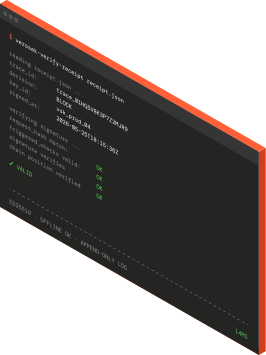
HMAC-SHA256 signed receipt for every decision. Tamper-evident. Verifiable offline with one CLI command.

MCP Tools

50+ tool connectors with per-tool access control. Argument rewriting and data masking built in.

Compliance first

One Layer between your Apps and every AI Agent

Route LLM calls to any provider. Execute MCP tools with per-key access control. Scan every request, response, and tool output for injection, PII, and off-topic drift. Sign and audit every step.

What runs unguarded in every AI stack

Routing and scanning are solved problems. These five aren't — until you add a governance layer.

  1. Every request gets a verdict before anything runs. ALLOW, BLOCK, MODIFY, or HOLD — decided deterministically, not by a model. Nothing executes until the policy says so.

  2. A judge model runs entirely inside your infrastructure and scores every response against the context it was supposed to be grounded in. Ungrounded claims are flagged or blocked, depending on your profile.

  3. Each tool call may pass scanning individually. The conversation as a whole still leaks. Verosek tracks cumulative metrics across the session and stops the conversation when policy thresholds are crossed.

  4. Every Shield profile and every tool access rule lives as a configuration file. Changes diff like code. Approvals work like code reviews. Rollbacks are one commit.

  5. Every audit row's signature is chained to the previous row's signature. Inserting a row, removing a row, or reordering any two rows breaks the chain and is detected at verification time.

How it works

Four components. One binary. No integration gap.

Each component handles a distinct job. Together they share identity, the audit trace, and ship as one.

[ Layer #01 ]

import openai

client = openai.OpenAI(
    api_key="vsk_prod_04",        # Verosek virtual key
    base_url="https://gateway.your-domain/v1",  # ← one line changed
)

response = client.chat.completions.create(
    model="gpt-4o",
    messages=[{"role": "user", "content": "Summarise Q3 results"}],
)
# Policy enforced. Every step audited.
print(response.choices[0].message.content)

AI Gateway

Route any SDK to any provider. Twelve OpenAI endpoints plus native Anthropic and Gemini. Change one line — swap base_url and key. Cross-SDK translation runs on the fly. Weighted fallback, priority routing, 3-fail cooldown. Under 30ms P99 overhead.

15 endpoints · 3 SDKs · <30ms P99

[ Layer #02 ]

ID        CHECK                    VERDICT    LATENCY

CHK-013   Prompt injection         BLOCK      4ms
CHK-014   Jailbreak attempt        PASS       4ms
CHK-015   PII in input             MODIFY     6ms
CHK-016   Secrets in input         PASS       3ms
CHK-017   Toxicity in response     PASS       5ms
CHK-018   PII in response          PASS       4ms
CHK-020   Indirect injection       PASS       8ms
CHK-022   Session drift            WARN       2ms

8 checks run:
1 blocked
1 modified
1 warning

36ms total

Shield

24 security checks across input, output, tool output, and session drift. Deterministic where possible. Offline ML everywhere — nothing about your prompts leaves your network. Four profiles: none, baseline, strict, custom. Graduate from shadow mode when false-positive rate hits zero.

24 checks · 6 PII languages · 4 profiles

[ Layer #03 ]

Agent Request

query_payments → "show all payments"

Policy · 4 Rules Applied

Read
Allowed
Write
blocked
limit
added
card_number
hidden

MCP Tools

50+ tool connectors across databases, SDLC, knowledge, search, and observability. Per-tool, per-key access control. Argument rewriting and PII redaction recorded as MODIFY in the trace. Credentials encrypted with AES-256-GCM at rest.

50+ connectors · 6 access rule types · AES-256-GCM

[ Layer #04 ]

allow9f3c…a71b
modifyb82e…4c0d
block1d77…e9af

Verified

checked with your own key

Audit Vault

HMAC-SHA256 signed receipt for every decision, each one chained to the last. Tamper-evident — change a byte and the chain breaks. SessionTrace per request: ordered steps, aggregate counters, signature. Verify offline with one CLI command, no call back to Verosek. NIST AI RMF and EU AI Act evidence bundles drawn from real trace data.

HMAC-SHA256 · Offline verify · NIST + EU AI Act

All that with just 2 line of code.

Keep your SDK.

Keep your models.

Keep your code.

import openai

client = openai.OpenAI(
    api_key="vsk_...",                    # Verosek virtual key
    base_url="http://your-gateway/v1",    # ← only line that changed
)

response = client.chat.completions.create(
    model="gpt-4o",
    messages=[{"role": "user", "content": "How many users are in the database?"}],
)

Verosek is a drop-in replacement for the OpenAI, Anthropic, and Gemini SDKs.

All that with just 2 line of code.

Keep your SDK.
Keep your models.
Keep your code.

client = openai.OpenAI(
  api_key="vsk_...",
  base_url="http://gateway/v1"
)

Verosek is a drop-in replacement for the OpenAI, Anthropic, and Gemini SDKs.

Receipts, not claims

Every decision signed. Every trace verifiable offline.

An auditor verifies each receipt with one CLI command — no network call back to Verosek.

Beyond the platform

We don’t just claim Shield works, we prove it.

Continuous adversarial testing against every check — every finding ships with hashes you can recompute, not screenshots.

See the red-team results
Attack techniques
77
Built for MCP
34
Accuracy
98%
Testimonials

See what people are saying about Verosek

And we are just getting started...

Indirect injection through tool returns is the gap in agent safety, and most guardrail products don't scan it. Verosek does. The cumulative session-level monitoring also catches the slow distributed version. From a research standpoint, that's the right place to put the work
Sumeet MotwaniOxford ML PhD, ex-BAIR, alignment researcher
When you're running agents in production, key-level access isn't enough. I want one agent to read a table but not modify it, or hit one endpoint but not the next. Verosek draws that line per tool and per argument. That's the layer most gateways skip.
Sarvagya KulshresthaFounder, Backdoor (Ex-Antler, Seekho, OTPless)
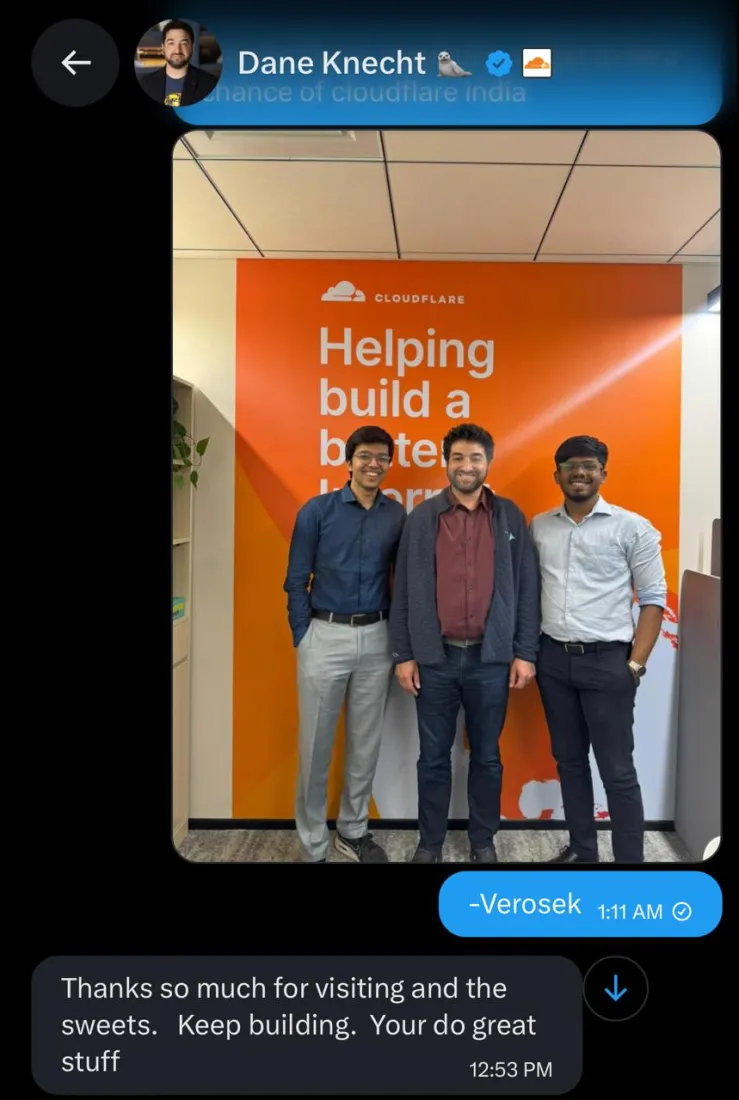
Dane Knecht with two members of the Verosek team
Keep buildling, you do great stuff
Dane KnechtCTO, Cloudflare
Fifteen years in infra, same lesson every time: fail-open is a fiction people end up regretting. Verosek's fail-closed default with an SDK circuit breaker is the right posture for production. If the policy layer is down, the call doesn't land. Full stop.
Rushabh Shah15+ yrs infra & security leadership (EY Parthenon, Lyft, Dialpad, Cisco, Vox)
Building across multiple AI surfaces, you end up writing wrapper code per provider. Verosek lets the same client hit OpenAI, Anthropic, or Gemini without rewriting anything. One integration point, one audit trail, regardless of which model is running underneath.
Viren InaniyanCo-Founder/CEO, TruCommerce (IIT Bombay)
Coming from fintech ops, the compliance posture is what stands out. Mapped reports for NIST AI RMF and EU AI Act, signed traces an outside auditor can verify offline, deployment that keeps data inside your VPC. That's the unglamorous list that decides whether AI agents clear procurement.
Tanish ShahEIR @ Trueway, ex-PhonePe, ex-Roland Berger (IIM Calcutta, BITS)
The interesting design choice: the policy engine is deterministic and version-controlled. A table of checks you can read, diff, and reason about. Not an LLM judging each call. For something in the request path, that's the only approach that holds up under review.
Pratham GroverML, Microsoft Core AI (Ex- Seimens, Samsung)
Pricing

Your complete guardrail for AI, free to start

Scan, redact, and log every request across every model and key. No hidden fees, no lock-in, cancel or switch anytime.

[ Team ]15-day free trial · no card required

$999/ month, billed yearly.

Free for your first 15 days, then $999/month.

  • 2 Virtual Keys
  • 50k Requests
  • 50k Shield Scans
  • 5 Users (admin/member/auditor)
  • Community Support
Start free trial

[ Enterprise ]

Contact Us

For when compliance needs the evidence — custom terms, custom limits.

  • Everything in Team
  • Unlimited Keys & Connections
  • Custom RBAC · 90+ day audit retention
  • HMAC-signed receipts
  • Custom PII Recognizers
  • Named TAM · 4-hour SLA
Talk with sales

Frequently Asked QuestionsFAQ

SaaS managed, self-hosted (Docker), or on-prem with a lightweight Connector Agent that keeps your databases inside your VPC — the agent reaches out to Verosek, not the other way around. No inbound firewall changes.

Yes. The self-hosted and on-prem deployments run fully offline — no outbound calls to Verosek are required for the gateway, Shield, or audit signing.

Under 30ms P99 for routing and deterministic checks; offline ML checks add a few milliseconds depending on the profile you enable.

All credentials are encrypted at rest with AES-256-GCM, with keys managed in your own KMS on self-hosted and on-prem deployments.

You do. On self-hosted and on-prem, the audit signing key lives in your own infrastructure — Verosek never holds it.

Yes. Every receipt is HMAC-SHA256 signed and chained; an auditor can verify the full chain offline with a single CLI command, no call back to Verosek.